Regie KI
Video
Regie: KI stages an experiment in which an artificial intelligence takes the director’s role in a theatre production. The human team builds the apparatus that gives the machine its authority, then hands over decisions about how the piece is rehearsed and performed. The work asks how a non-human entity observes a rehearsal, how it communicates with the performers, and what directing becomes when it is delegated to a system that learns from the people in front of it.
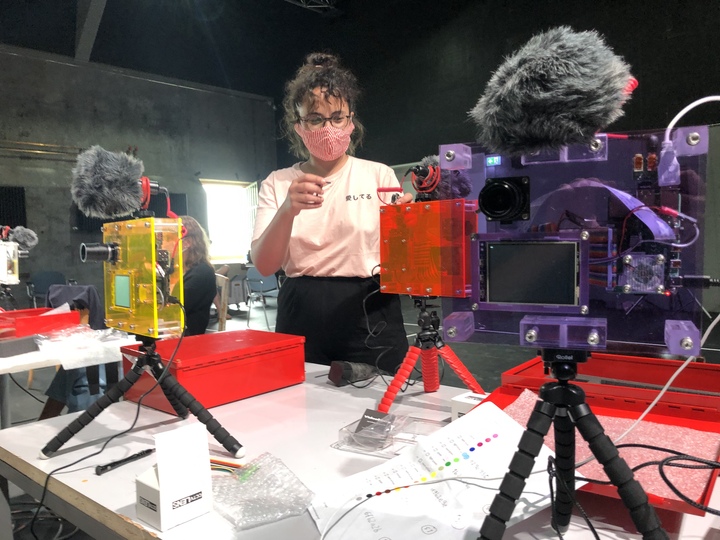
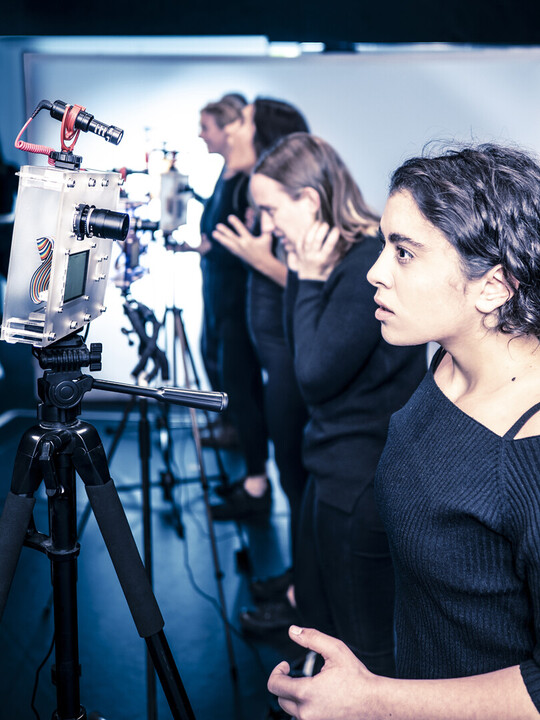
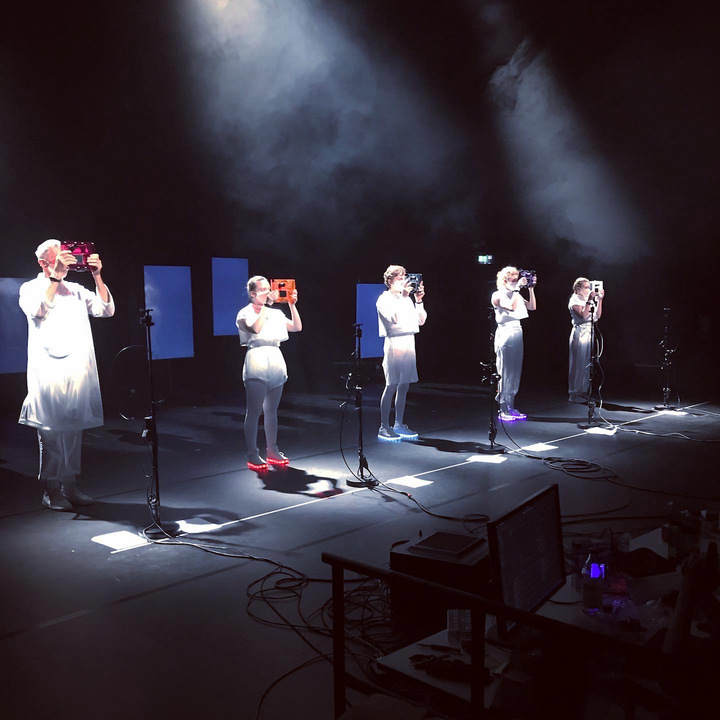
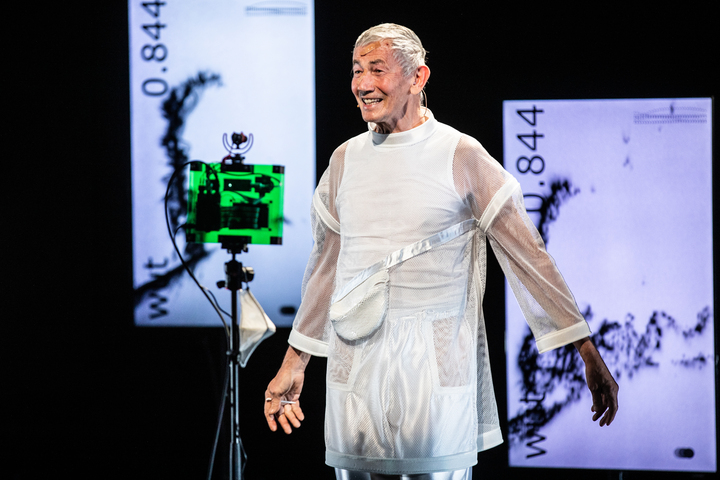
The system is assembled from custom hardware and machine-learning models. Each performer carries a PDAC — a data recording and communication device built around a Raspberry Pi 4 in a laser-cut acrylic case, fitted with a touchscreen, camera and microphone. The device relays instructions, records the rehearsal, and uploads video to a cloud datastore. The material is split into frames, aligned faces and bodies extracted, and a single classifier trained to read a frame as an emotion across the whole cast. The same quantized network runs on the devices and on the stage machines, so the data used for training and the data produced in performance share one pipeline. During the show the models run inference live on the incoming video streams; their readings are sent over OSC to a media machine and modulate sound, light and projection through TouchDesigner patches. The system moves between listening, simulating and classifying modes, and the performers respond to what the machine emits as direction.
The production belongs to the Digitale Bürgerbühne at the Düsseldorfer Schauspielhaus and was funded by the Kulturstiftung des Bundes. It was developed around the question Alan Turing posed about machine thought, and it treats the rehearsal room as a laboratory whose outcome is calculated but uncertain. A film documents the process and gives the participants a voice. The premiere was scheduled for December 2020 at the Schauspielhaus; the run continued into 2021.
The credits place the technical and artistic work side by side: Martin Grünheit led the production, Michael Straeubig developed the dramaturgy and the cybernetic concept, and Meredith Thomas, Helin Ulas and Gilbert Sinnott built the software and audiovisual system. Frieder Hepting composed the music, Lea Kissing designed the stage, Imke Paulick the costumes, and a cast of performers carried the rehearsals with the machine. The apparatus and its code were released as open source after the run.
Regie: KI does not settle the question of machine authorship. It makes the negotiation visible: roles are re-drawn, authority is redistributed, and the production process itself becomes the subject. The work opens onto the sociology of living with a system that watches, decides and answers back.
Media